UMBILICAL HERNIA IN NEWBORN – what parents need to know.
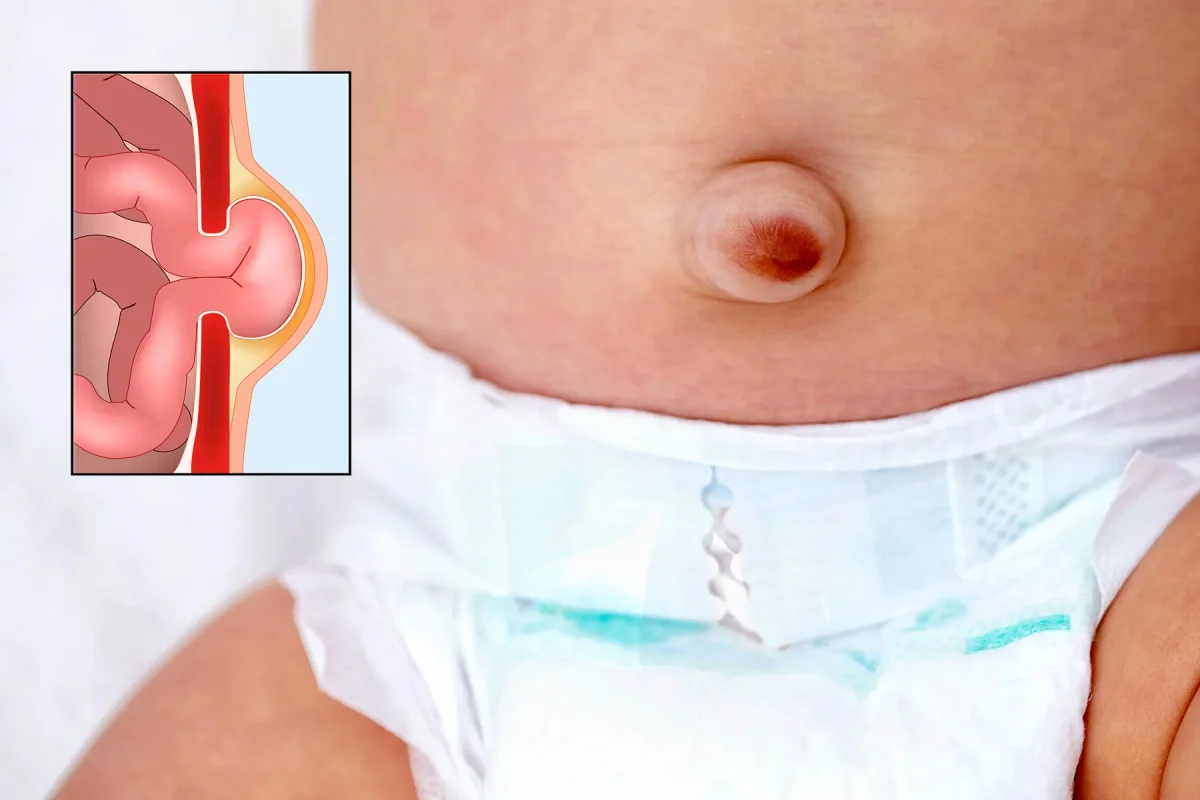
UMBILICAL HERNIA IN NEWBORN – what parents need to know.
An umbilical hernia in a neonate is a soft bulge near the belly button that happens when the muscle ring around the umbilical cord opening does not close completely after birth.
Key Facts & What to Expect
- How it looks: You will see a round “outie” or swelling at the navel. It often gets larger when the baby cries, coughs, or strains, and shrinks or disappears when the baby is calm or lying flat.
- Pain level: It is usually painless and soft to the touch. You should be able to gently push the bulge back inside the abdomen without hurting the baby.
- Natural healing: Around 80% to 90% of infant umbilical hernias close on their own as the baby’s abdominal muscles grow stronger, typically by age 3 to 5.
What NOT to Do (Home Remedies)
- No taping or coins: Do not tape coins, belly bands, or tight cloth straps over the belly button. These old remedies do not help the muscle close and can damage or infect the skin.
- No forceful pressure: Avoid pushing the hernia in too roughly, though normal soothing and handling are fine.
When to Seek Emergency Care
Complications (like the intestine getting trapped or “incarcerated”) are very rare in babies. Seek immediate medical attention if you notice any of these warning signs:
- The bulge becomes firm, hard, or swollen and cannot be pushed back in.
- The skin over the belly button turns red, dark, or discolored.
- Your baby is vomiting (not just spitting up milk) or has severe abdominal pain/crying that cannot be comforted.
- Your baby develops a fever or refuses to feed.
When to See a Pediatrician
- Bring it up during regular well-baby checkups.
- Talk to your doctor if the hernia is still large or has not closed by the time your child reaches 4 to 5 years old, at which point a simple surgical repair may be considered.